MIB and TU-BA at two key architecture gatherings in Copenhagen
Uncategorized
26. 11. 2025
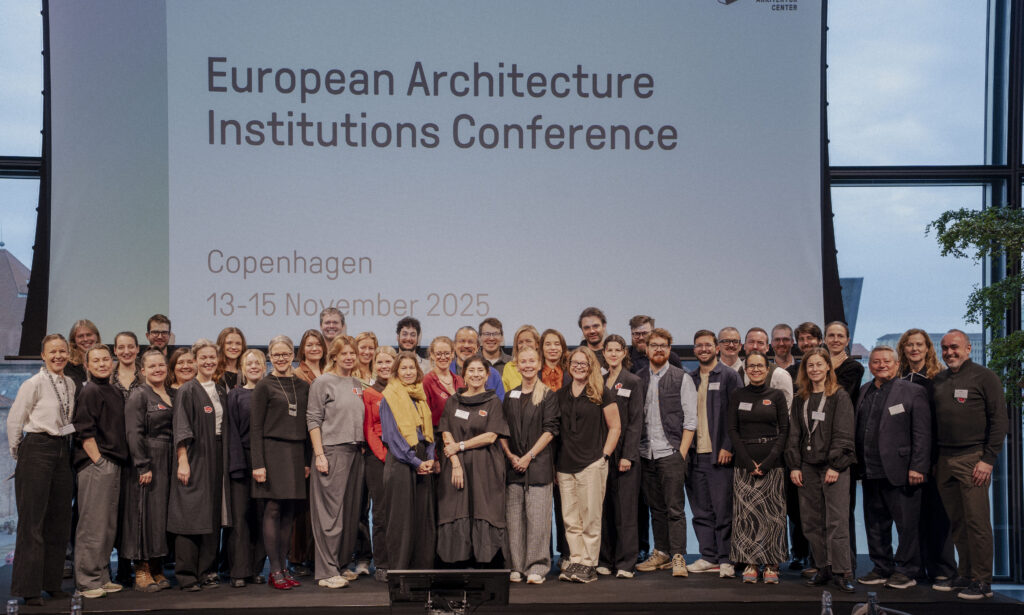
In mid-November, representatives of European architectural institutions and city governments gathered in Copenhagen for two major events, and MIB was not to be missed.
Article by Petra Marko
In mid-November, representatives of Europe’s architecture institutions and city governments gathered in Copenhagen for two important events: the European City Architects Meeting 2025 hosted by the City Architect Lars Jensen, and the European Architecture Institutions Conference, hosted by the Danish Architecture Centre (DAC) in connection with the Polish–Danish Presidency of the Council of the EU.
I had the opportunity to participate in both events and present MIB’s work including TU-BA, our newly opened centre for architecture and city planning.
European Architecture Institutions Conference: the role of architecture centres in a changing Europe
Danish Architecture Centre (DAC) hosted representatives of architecture museums, foundations, centres and networks from more than 20 European countries. The conference focused on the future role of architecture institutions, how they can define clear values, build deeper connections with communities and create shared platforms across Europe.
I was invited to speak in the “New Beginnings”, where I introduced TU-BA, Bratislava’s new centre for architecture and city planning, opened in October 2025, creating an open, accessible space for dialogue, public participation and interdisciplinary collaboration. The conference introduced inspiring lessons and knowledge sharing across European architecture centres from Frankfurt, Dublin, Milan, Budapest, Helsinki, Prague and many others.

European City Architects Meeting: shared challenges in shaping resilient cities
The City Architects Meeting brought together an inspiring group of municipal architects who are shaping the quality of urban environments across Europe. The discussions focused on shared challenges – housing affordability, climate resilience, inclusive public spaces – and highlighted the important role that city architects play in steering long-term spatial development.
The day concluded at BLOXHUB, where city architects, policy experts, and industry partners contributed to the discussion on Denmark’s new National Architecture Policy.
The round tables confirmed how important strong design leadership is for cities navigating rapid social and environmental change – an ambition MIB actively advances in Bratislava.

Picture: Sofie Bogegren
European Architecture Institutions Conference: the role of architecture centres in a changing Europe
Danish Architecture Centre (DAC) hosted representatives of architecture museums, foundations, centres and networks from more than 20 European countries. The conference focused on the future role of architecture institutions, how they can define clear values, build deeper connections with communities and create shared platforms across Europe.
I was invited to speak in the “New Beginnings”, where I introduced TU-BA, Bratislava’s new centre for architecture and city planning, opened in October 2025, creating an open, accessible space for dialogue, public participation and interdisciplinary collaboration. The conference introduced inspiring lessons and knowledge sharing across European architecture centres from Frankfurt, Dublin, Milan, Budapest, Helsinki, Prague and many others.
Site visit to Nørrebro and Nordvest
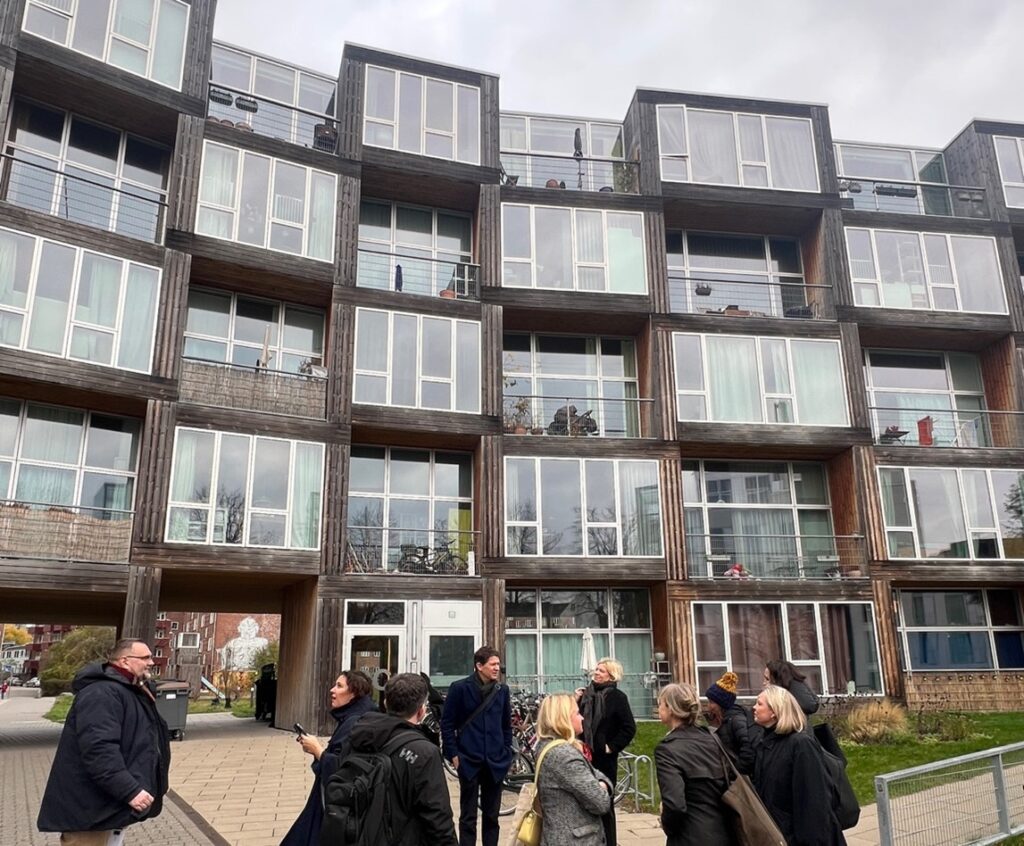
As part of the City architects gathering, we visited Nørrebro and Nordvest, two of Copenhagen’s most ethnically diverse districts. Here, the city works closely with local initiatives to strengthen social cohesion, stimulate economic activity and test environmentally sustainable approaches at the neighbourhood scale. The projects we visited showcased how Copenhagen links architectural quality with social value:
Thoravej 29 by Pihlmann and Bikubenfonden demonstrated a bold approach to regenerative architecture, transforming a former factory into a creative and cultural hub that gives new life to an industrial structure.

The Library at Rentemestervej, designed by COBE and commissioned by the city, serves as far more than a traditional library. It functions as a social anchor for the community, offering cultural programmes and essential services that respond to the needs of local residents.
Dortheavej Residences by BIG presented an innovative affordable housing model, using a smart structural system that allows modular stacking, reducing construction costs while achieving generous ceiling heights and well-designed living spaces.

The meeting reinforced the value of exchanging practical, built examples—not only policies and strategies. Seeing how Copenhagen implements social, architectural and environmental ambitions on the ground offered relevant lessons for Bratislava as we continue developing our own neighbourhoods, public spaces and housing strategies.
A stronger European network for Bratislava
Both gatherings highlighted a shared European ambition: to reinforce networks, exchange knowledge and support each other in shaping better, more sustainable built environments.
For MIB and TU-BA, participation in Copenhagen enables us to bring home new approaches, expand collaborations and ensure that our work is aligned with leading European practices – from climate-conscious design to meaningful public engagement.
We extend our thanks to the Danish Architecture Center, the City of Copenhagen and all participating institutions for their openness, inspiration and hospitality. We look forward to continuing these dialogues and contributing to a more connected European architecture network.

Share with friends: